C42 Design Breakdown
Pulsar Mount: Compact Precision for Long Exposures
A C42 design breakdown of how Pulsar combines a compact harmonic drive with a servo motor and a high-resolution output-side encoder to measure and correct real mount motion for precise long-exposure tracking.
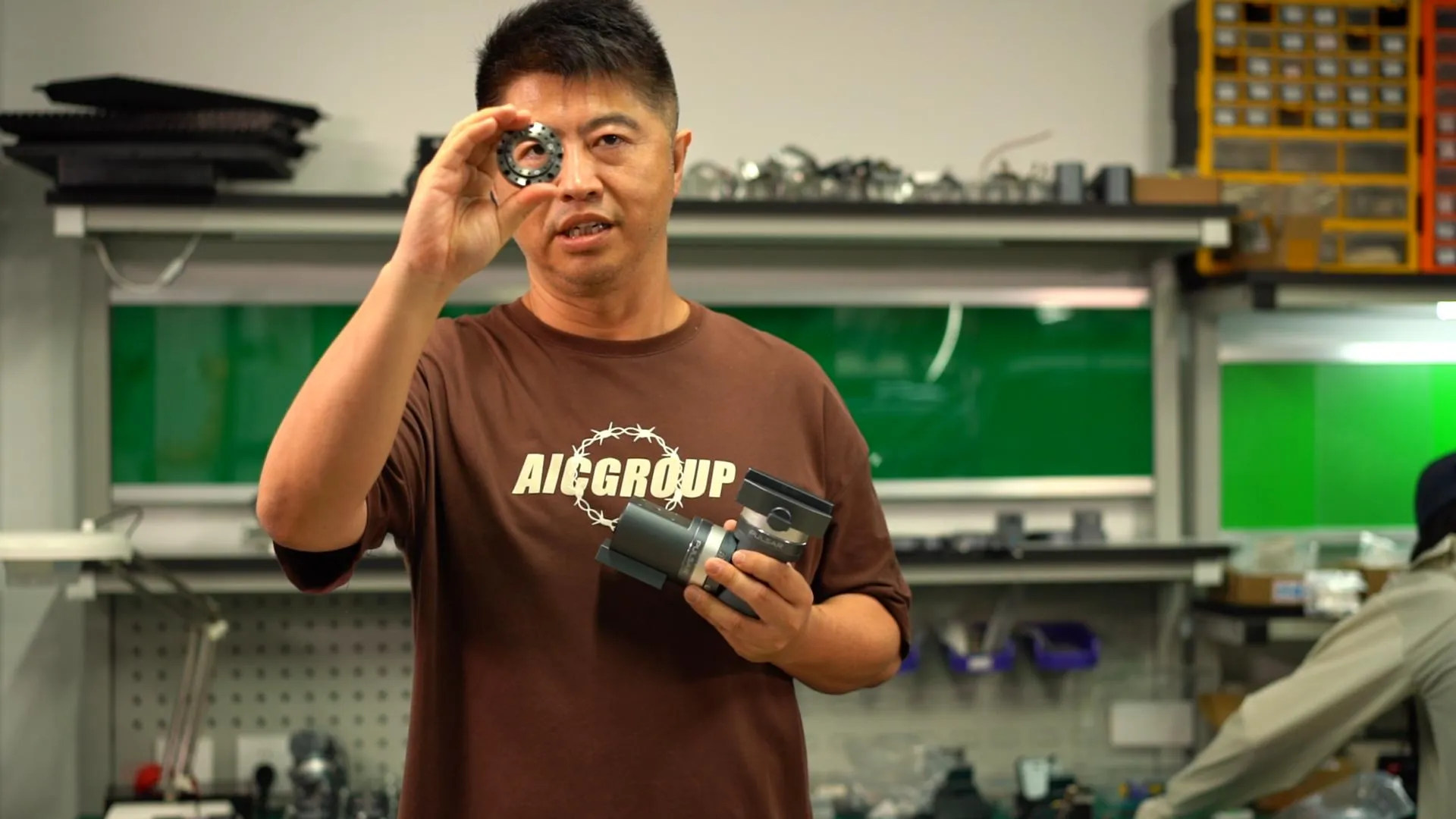
An equatorial mount has a demanding job once the shutter opens: keep a star on the same point of the sensor while the Earth turns beneath it. The work before that is less glamorous. Someone has to carry the mount into the field, set it up in the dark and feel its weight the whole way there.
We wanted Pulsar to be a mount people actually take outside, not one that stays home because its drive is too large or heavy. That led us to a harmonic reducer with an 11 mm flexspline. The same type of transmission is used in robot joints, where a small motor has to produce substantial torque inside a compact arm. It gave us the small mechanical core we were looking for.
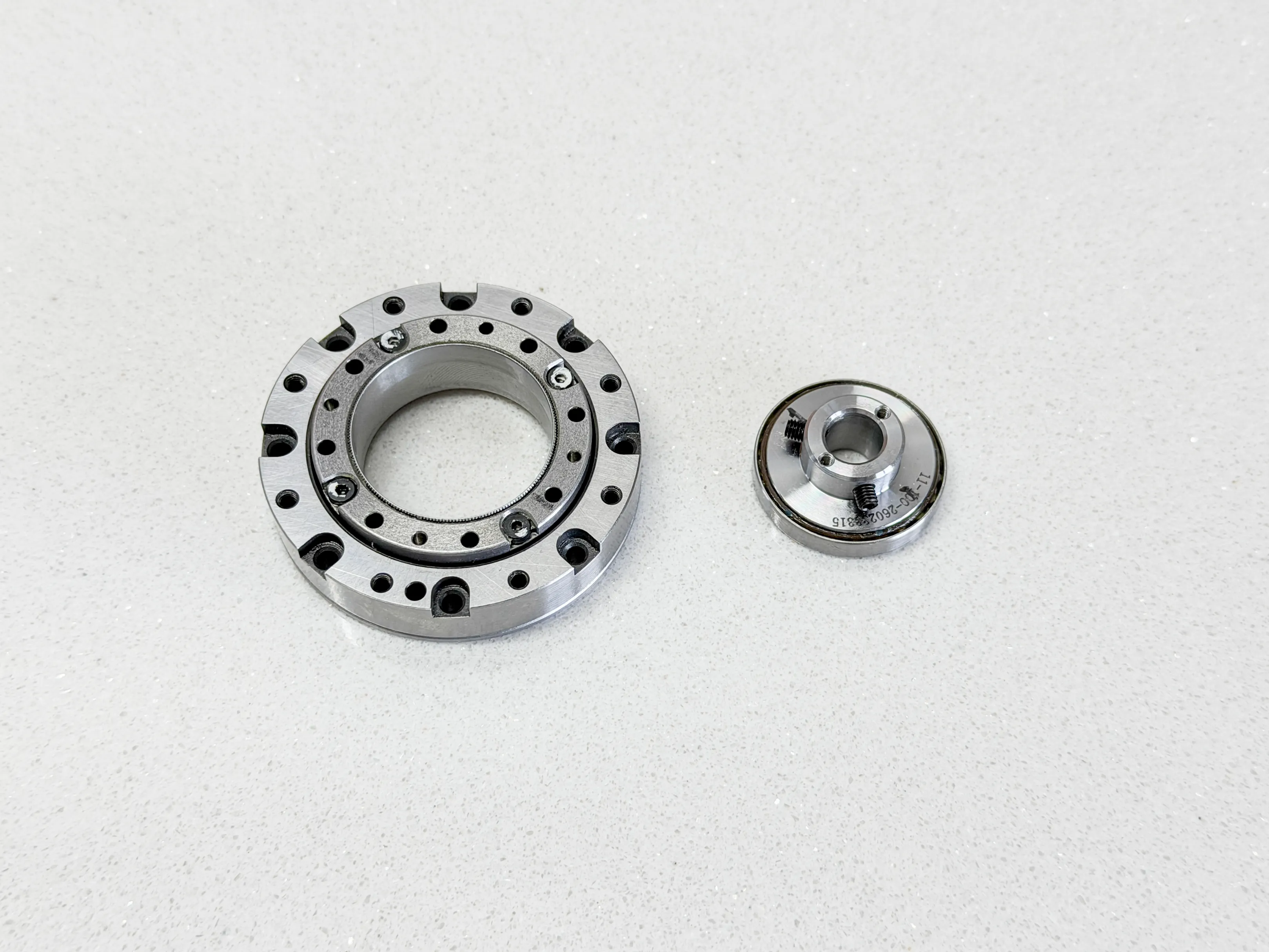
Then the tests showed us the price of that choice. Uncompensated, the periodic error of this small transmission could exceed 200 arcseconds. At normal speeds, the motion is easy to miss. A long exposure makes it visible. A star that should stay fixed begins to move across the sensor.
We had the size we wanted, but not yet the tracking we needed. We chose to keep the compact core and make the rest of Pulsar responsible for its real output. The mount would have to see what came out of the transmission and correct it.
The measurement had to move
Measuring at the motor tells the controller what went into the reducer. The reducer sits between the motor and the mount axis, and the camera rides on the output side. That is where the measurement has to happen.
Pulsar uses a hollow-shaft motor and an internal linkage to connect a high-resolution encoder to the output side of the reducer. The encoder reads the axis that carries the camera. The controller compares that measured position with the intended position and corrects the difference continuously.
This is the closed-loop servo inside Pulsar. It measures the motion the camera actually follows, then uses that measurement to correct the error introduced through the transmission.
In our development tests, the loop has brought periodic error from more than 200 arcseconds to below 10 arcseconds. Our next target is below 5 arcseconds. For the photographer, the result is already clear: much of the transmission error is corrected inside the mount before it can reach the exposure.
Precision should not make the mount harder to use
A portable mount does not spend the whole night tracking untouched. People change lenses, rebalance the rig and turn to a new target. Sometimes the fastest way there is to unlock an axis and move it by hand.
That should not cost the photographer their setup. Pulsar has absolute position sensing on its RA and DEC axes. After an axis has been moved by hand, the system reads its current angle at the next power-up instead of returning home and rebuilding its position from zero.
Rotation creates another practical problem: cables. Custom slip rings carry power and signals through the moving structure, so Pulsar’s axes and internal controller stay connected without an exposed inter-axis cable tightening or wrapping around the mount as it turns. The complete imaging system still connects to power and other equipment, but Pulsar’s own axes do not drag their wiring around with them.
The output encoder, absolute position sensing and internal rotary connections all serve the same product goal. Pulsar stays compact without becoming awkward to handle in the field.
The axis is not the whole image
The output encoder tells Pulsar what happened at the mount axis. Other factors, including polar alignment and movement elsewhere in the imaging system, can still shift a star in the final photograph.
C42’s GWI™ watches stars in the same optical path used for imaging. Pulsar corrects the motion it can measure at the axis first. If movement remains in the image, GWI™ can provide another layer of feedback.
The two measurements have different jobs. One closes the loop around the mount’s mechanical output. The other looks at the result on the sensor.
GWI™ is one of ArcBlue’s most important technical innovations. We will explain it in detail in a separate Blog.
The Pulsar this engineering delivers
One decision shaped the whole product: keep the mechanical core small and take responsibility for how it really behaves. The closed loop controls the error we found in tracking. Absolute position sensing and internal rotary connections make the mount easier to handle when the night does not go exactly to plan.
The 11 mm reducer gave Pulsar its compact form. In the field, the photographer can move that mount by hand and continue without rebuilding its position from zero. Once the shutter opens, the output encoder and closed loop take over at the axis carrying the camera. This is the Pulsar we are building for our backers: portability without giving up the control a long exposure demands.
