
C42 Design Breakdown
C42 Will Come in Three Native Mounts and an M68 Interface
Why C42 moved from one Sony E-based adapter strategy to three native lens mounts and a dedicated M68 telescope interface.
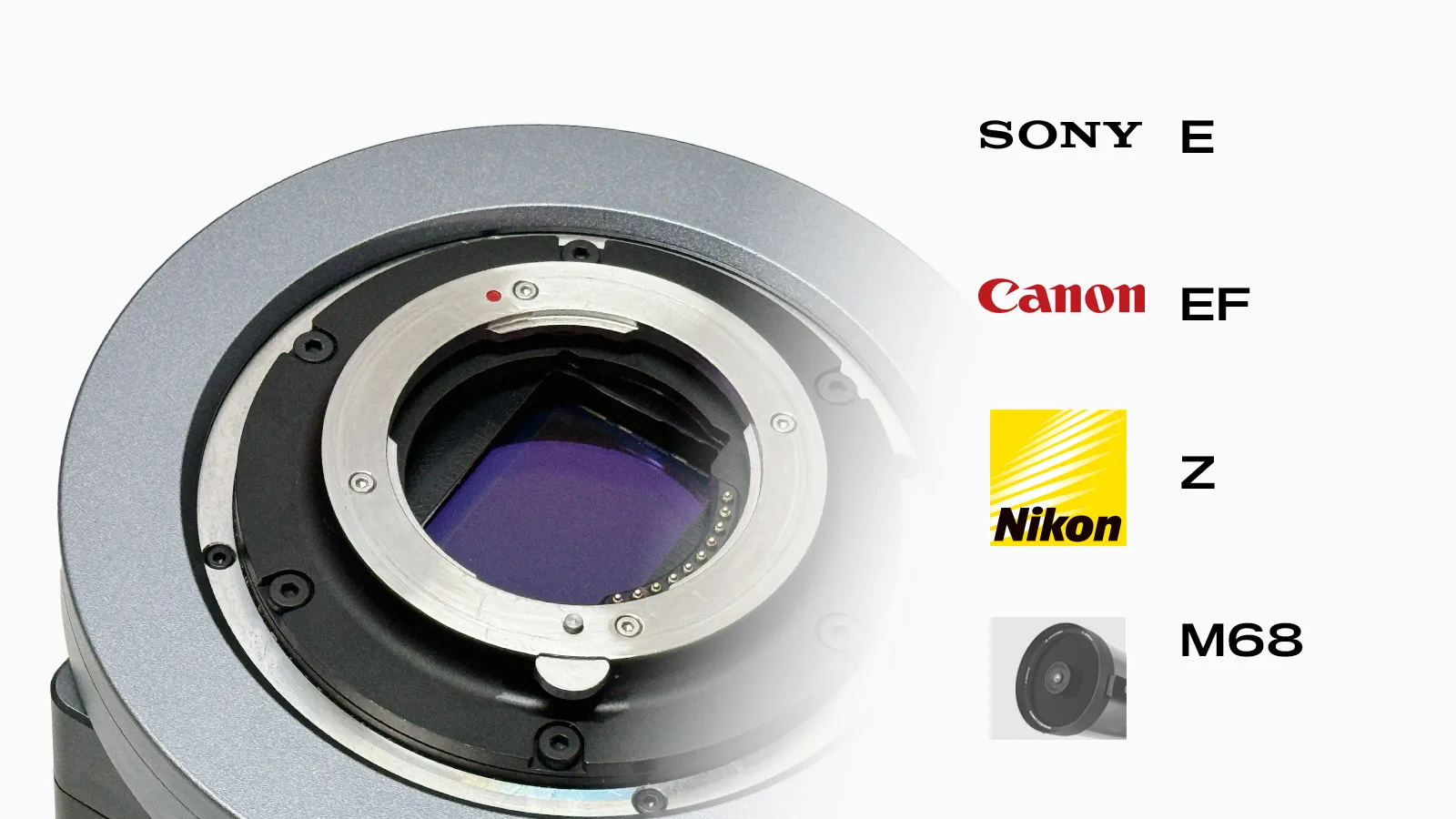
When we began developing C42, the mount plan looked simple: use the short flange distance of Sony E as a common base, then reach other lens systems through adapters wherever the geometry allowed.
One camera interface, many bridges.
It was a practical way to start. We could focus on one native mount while leaving room for lenses with longer register distances. It also kept the first version of the camera mechanically simpler.
But as more photographers encountered C42, the same requests kept returning. Sony users wanted to bring their E-mount lenses. Nikon users wanted to keep using their Z glass. Canon photographers had years of EF lenses they already knew and trusted. Telescope users needed a clean route into a very different kind of imaging train.
The demand was broader than our original plan.
What the tests changed
At first, adapters still seemed like the obvious answer. Then we began testing more combinations.
The physical connection was only one part of the work. Each added combination could change lens communication, aperture control, focus behavior, power requirements and startup timing. It also introduced another set of mechanical tolerances between the optics and the full-frame sensor.
This is not unique to C42. Camera and adapter manufacturers publish compatibility information by specific combinations because sharing a mount—or being able to attach an adapter—does not guarantee that every function will behave in the same way.
Our tests led us to the same conclusion: an adapter is not one compatibility solution. It is the beginning of another compatibility project.
That did not make adapters useless. They remain valuable for many lenses and optical systems. But relying on them as the main route for every photographer would leave too much of the experience dependent on an increasingly long chain of parts, protocols and exceptions.
The new plan
For the crowdfunding release, C42 is now being developed around:
- a native Sony E version;
- a native Nikon Z version;
- a native Canon EF version;
- a separate M68 interface for telescopes and related imaging trains.
The first three are native lens-mount versions. M68 is not a fourth lens mount; it is the dedicated path for telescope-based systems.
This change gives us more work, not less. Each version still needs its own mechanical, electronic and imaging validation, and a native mount does not mean that every lens carrying the same label is automatically approved.
What it does give us is a clearer foundation. Instead of asking most users to begin with an adapter, C42 can begin with the optical system they already use. Adapters can then do what they are best at: extend the system for particular combinations, rather than carry the whole compatibility promise.
The original Sony E strategy helped us build the first C42. Testing helped us see where that strategy stopped being enough. The new mount plan is the result: less elegant as a single engineering shortcut, but much more useful as a camera system people will actually live with.